
- All Products
- Corrosion Inhibitor
- Oxygen Scavenger
- Drag Reducing Agent / Flow Improver
- H2S Scavenger
- Triazine
- Demulsifier
- Emulsion Breaker
- Surfactant
- Wax / Parrafin Disperssant
- Asphaltene Inhibitor

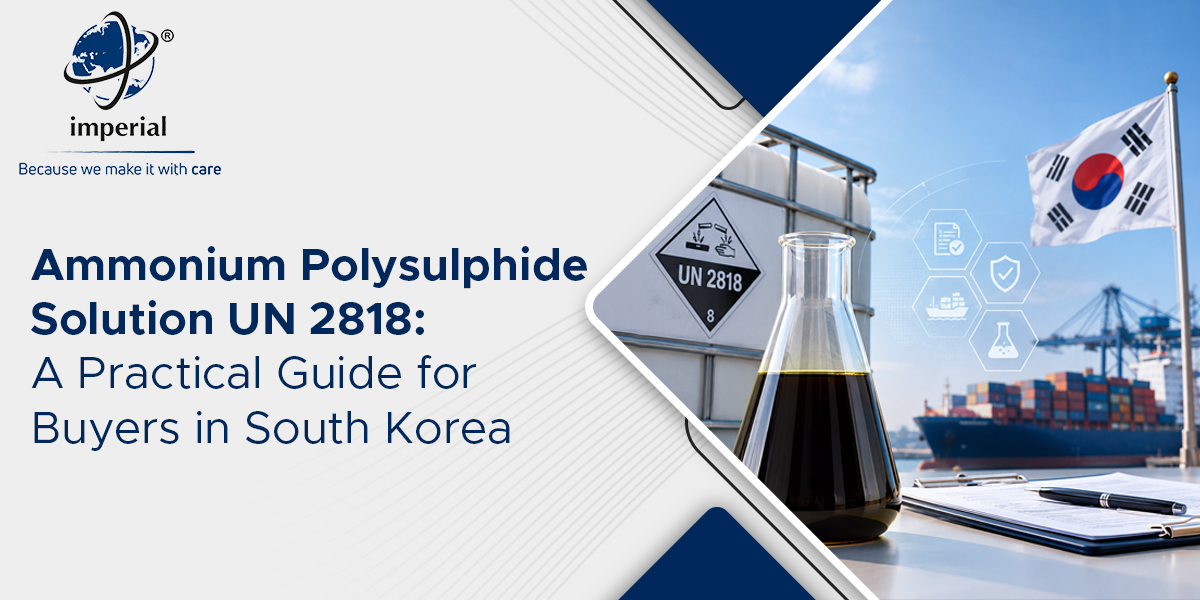
Buying a hazardous chemical often brings more questions than expected. You may worry about quality, safe shipping, documents, or delivery delays. As an Ammonium polysulphide supplier in South Korea, we understand how one missing detail can affect your whole order. At Imperial Oilfield Chemicals Pvt. Ltd., we help you review each point before the material leaves our site.
Many people tell us that product names alone can cause doubt. Similar names may appear on quotes, labels, and safety papers. When buying an Ammonium polysulfide aqueous solution in Korea, you need clear details about strength, composition, use, and safe handling. A simple check at the start can prevent confusion at the port or plant.
Ammonium polysulfide solution UN 2818 is a sulphur-based liquid used in selected industrial work. Its exact use can change based on strength and process needs. The solution may have a strong smell and can release harmful vapours if stored or handled in the wrong way.
At Imperial Oilfield Chemicals Pvt. Ltd., we treat each enquiry as a technical purchase, not a basic sale. As a UN 2818 chemical supplier in South Korea, we ask about your required grade, strength, order size, delivery point, and end use. This helps us prepare the right offer and documents.
Ammonium polysulphide is often used where sulphur-bearing chemistry supports a set plant process. Buyers may use it in oilfield work, industrial treatment, chemical processing, or other controlled systems. The final choice must always match your process needs and site safety rules.
The lowest quote can look tempting when budgets are tight. Yet a chemical order involves more than the price per kilogram. Product strength, packaging, freight class, documents, and delivery terms can change the real cost.
As an Ammonium polysulphide supplier in South Korea, Imperial Oilfield Chemicals Pvt. Ltd. helps you look beyond the first number. We discuss what is included in the quote and which costs may arise later. This gives your purchase team a clearer view before approval.
A buyer should check the following points before placing an order:
We’ve seen this happen often. A buyer confirms the price but later finds that packaging does not fit the storage area. Sometimes the paperwork carries a different product description from the shipping label. Small gaps like these can hold a shipment for days.
The strength of an Ammonium polysulfide aqueous solution in Korea should match your plant process. Never assume that every offer covers the same grade. Ask for the stated concentration, physical form, appearance, and any test limits linked to your use.
Imperial Oilfield Chemicals Pvt. Ltd. can discuss your required specification before production or dispatch. We suggest sharing your purchase specification or approved sample details. This gives both sides one clear target and reduces the risk of a rejected batch.
Your specification review may cover:
At first, this level of detail may feel excessive. Yet it often saves time during inward checks. Your quality team can compare the received batch against agreed limits without chasing fresh answers.
Transport rules deserve careful attention because this is not an ordinary liquid shipment. Ammonium polysulfide solution UN 2818 may require dangerous goods controls based on its composition, strength, test data, and current Safety Data Sheet. The final transport details must match the supplied batch and approved shipping papers.
UN 2818 is linked with toxic liquid transport entries. Yet buyers should not rely on the UN number alone. The proper shipping name, hazard class, packing group, labels, and packaging choice must follow the current product data and transport mode.
At Imperial Oilfield Chemicals Pvt. Ltd., we prepare shipment information with care. Your freight agent should still review the papers before booking. Sea, road, and air shipments may have different limits, so early checks can prevent a last-minute refusal.
Before shipment, ask your logistics team to confirm:
Working with a UN 2818 chemical supplier in South Korea should include a clear safety discussion. Your staff need to know where the drums will be stored, how each drum will be moved, and what action is needed during a leak.
Ammonium polysulphide solution may release ammonia or hydrogen sulphide under certain conditions. Contact with acids can raise this risk. Both gases can harm health, so good ventilation and trained staff are vital.
Your site plan should include:
Imperial Oilfield Chemicals Pvt. Ltd. advises buyers to review the current Safety Data Sheet before receipt. Your safety team should also check local workplace rules. If any detail feels unclear, ask before opening or moving the container.
When ordering an Ammonium polysulfide aqueous solution in Korea, local chemical rules must be checked before shipment. Registration, reporting, permits, labels, or customs papers may apply based on composition, volume, and intended use.
South Korean chemical controls can involve more than one local body or legal duty. Your importer, customs broker, and safety adviser should review the exact product before booking freight. This check should use the current composition and Safety Data Sheet.
A useful import file may include:
Imperial Oilfield Chemicals Pvt. Ltd. supports buyers with core export documents linked to the order. We also work with the buyer’s shipping instructions, as long as all needs are shared before dispatch.
Packaging for Ammonium polysulfide solution UN 2818 must suit the material and shipping route. A drum that looks strong may still be unsuitable for dangerous goods transport. Approved packaging helps limit leaks, damage, and handling risk.
Before confirming the order, decide whether your site can handle the offered pack size. Think about forklifts, storage racks, transfer pumps, floor space, and spill control. A pack that suits freight may not suit daily plant use.
Imperial Oilfield Chemicals Pvt. Ltd. discusses available packaging based on order size and transport needs. Final pack selection depends on product data, carrier rules, and buyer approval.
Hazardous chemical shipping can take longer than standard cargo. Carrier space, port approval, document checks, weather, and local clearance may affect the schedule. A small stock buffer can protect your production plan.
As an Ammonium polysulphide supplier in South Korea, we encourage buyers to share forecast needs early. Regular demand is easier to plan when expected volumes and delivery months are known. This also allows time for production, testing, packing, and freight booking.
A good supplier should welcome careful questions. As a UN 2818 chemical supplier in South Korea, Imperial Oilfield Chemicals Pvt. Ltd. encourages you to ask about product strength, batch testing, packaging, documents, lead time, and shipping support.
Before signing the order, ask:
Chemical buying feels easier when each concern receives a direct answer. You should know what you are buying, how it is packed, which papers come with it, and when it can reach your site.
Imperial Oilfield Chemicals Pvt. Ltd. supports industrial buyers with product discussion, planned production, batch testing, export packing, and shipment papers. We aim to help you make a sound purchase without hidden gaps.
If you need Ammonium polysulfide solution UN 2818, send us your required strength, quantity, delivery port, packaging choice, and expected date. We can then review the enquiry and prepare a clear offer.
As an experienced UN 2818 chemical supplier in South Korea, Imperial Oilfield Chemicals Pvt. Ltd. values clear communication at every stage. A careful order is safer for your staff, easier for your logistics team, and better for your plant schedule.


Ammonium polysulphide solution UN 2818 is a corrosive, toxic liquid used in oilfield work, chemical processing, and selected industrial treatment systems.
Confirm the required strength, quantity, packaging, Safety Data Sheet, Certificate of Analysis, delivery port, lead time, and local import duties before ordering.
Yes. It can cause severe skin burns and eye damage. It may also release harmful gases, so trained handling and proper ventilation are essential.
UN 2818 identifies ammonium polysulphide solution during transport. It is listed as Class 8, Packing Group II, with an added toxic hazard.
Yes. Contact with acids can release toxic hydrogen sulphide gas. Keep the solution away from acids, heat, and unsuitable chemicals.
Store it in approved, tightly closed containers within a cool, secure, and well-ventilated area. Keep containers upright and separated from acids.
Buyers should request a Safety Data Sheet, Certificate of Analysis, invoice, packing list, dangerous goods declaration, and relevant country-of-origin documents.
Registration or reporting may apply under South Korean chemical laws. Requirements depend on the substance, annual volume, composition, and planned industrial use.
No. Packaging must be suitable and approved for dangerous goods transport. The container type should match the current transport rules and shipping method.
Choose a supplier offering clear product data, stable batch quality, safe export packaging, complete documents, realistic lead times, and direct technical support.
Different plant processes may need different strengths. Confirming the concentration helps prevent poor results, failed quality checks, process delays, and avoidable product waste.
Order early enough for production, batch testing, dangerous goods approval, vessel booking, and customs checks. A stock buffer can protect planned operations.