
- All Products
- Corrosion Inhibitor
- Oxygen Scavenger
- Drag Reducing Agent / Flow Improver
- H2S Scavenger
- Triazine
- Demulsifier
- Emulsion Breaker
- Surfactant
- Wax / Parrafin Disperssant
- Asphaltene Inhibitor

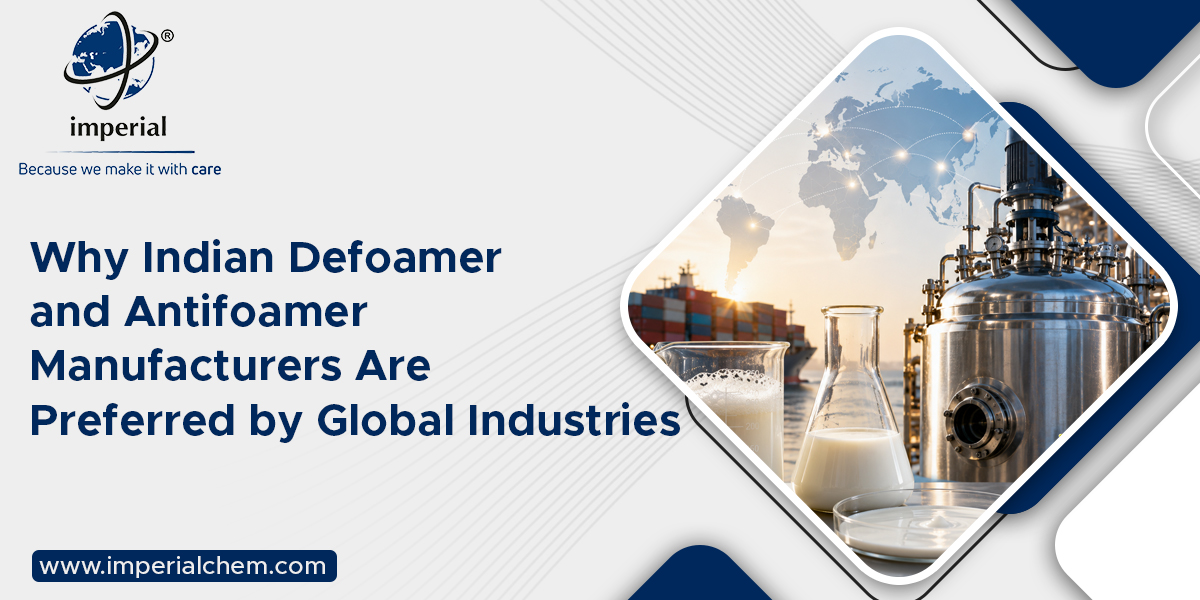
Foam often looks harmless until production slows, tanks overflow, or product quality starts changing. Many plant teams tell us the problem begins with a few bubbles. Within hours, those bubbles can affect output, cleaning time, and worker safety. At Imperial Oilfield Chemicals Pvt. Ltd., we develop each Defoamer / Antifoamer around the actual process, not a standard sales list.
We’ve seen this happen across oilfields, water plants, paint units, paper mills, and chemical sites. Foam may come from mixing, pumping, heat, gas, or raw materials. A product that works well in one tank may fail inside another. Temperature, pH, pressure, and flow can change the whole result.
This is why global buyers value Indian makers with sound lab skills and flexible production lines. At Imperial Oilfield Chemicals Pvt. Ltd., we first learn how the foam forms. We then consider how quickly control is needed and what happens after dosing. This careful start helps us avoid waste and repeated trials.
A Silicone-Based Defoamer Manufacturer in India must look beyond quick foam collapse. Silicone products can spread well and work at low dose levels. Yet the wrong grade may affect coating, filtration, or later treatment. We study the full process before choosing the base, carrier, and active level.
Price matters, but buyers rarely choose a supplier on price alone. A delayed shipment or weak batch can cost far more than a small saving. Indian chemical makers have gained trust through sound process knowledge, skilled teams, flexible batch sizes, and strong export support.
India also has a wide base of chemical plants, testing labs, packaging firms, and ports. This gives us better control over sourcing and shipment planning. Imperial Oilfield Chemicals Pvt. Ltd. uses this network to support buyers who need steady supply without losing product care.
As a Foam Control Chemical Exporter in Kuwait, we understand how heat can affect storage and field use. Product stability matters from the factory floor to the final dosing point. We review packing, storage advice, and shipment plans so each batch reaches the site in usable condition.
Most people don’t connect foam trouble with small process changes. A new surfactant, faster pump, warmer tank, or higher salt level can create a fresh issue. The old chemical may then need a higher dose, which raises cost and can leave unwanted residue.
At Imperial Oilfield Chemicals Pvt. Ltd., we ask simple but useful questions. When does the foam appear? How long does it last? Is the system water-based or oil-based? What is the working temperature? These answers guide our lab work and help us prepare a closer match.
An OEM Antifoamer Manufacturer in India must protect the buyer’s product plan as carefully as the formula. We support chosen pack sizes, labels, batch needs, and supply terms. This allows distributors and industrial brands to build a clear product range without setting up a separate plant.
A Private Label Antifoam Supplier in the UAE also needs to respect local market needs. Pack design, label text, storage notes, and order size can vary between buyers. We plan these details early, reducing delays once repeat orders and market demand begin to grow.
A sample test should reflect real plant conditions as closely as possible. A beaker test gives useful clues, but pumps, pressure, gas flow, and dirt may change results. Imperial Oilfield Chemicals Pvt. Ltd. reviews both lab findings and site feedback before suggesting a final dosing range.
The right Defoamer / Antifoamer should do more than remove visible bubbles. It should help the process run with less overflow, fewer stops, and better tank use. We also look for the lowest useful dose because excess chemical can raise cost or disturb later process steps.
A successful first sample feels encouraging, but repeat quality builds the real relationship. Buyers need the next drum to work like the first drum. Raw material checks, controlled mixing, batch testing, and clear records all help maintain that result.
As a Silicone-Based Defoamer Manufacturer in India, Imperial Oilfield Chemicals Pvt. Ltd. checks the balance between fast knockdown and lasting foam control. We also consider ease of mixing, shelf life, and use conditions. This balance helps plant teams dose with more confidence.
Our work as a Foam Control Chemical Exporter in Kuwait also requires clear talks before dispatch. We confirm grade, pack size, batch volume, shipping marks, and key papers. These steps may appear small, but a missing detail can hold a shipment or delay plant work.
Building a chemical brand takes patience. Many buyers begin with one market, one pack size, and a small order. Demand may grow after field results become known. We support this path through planned scale-up rather than forcing an unsuitable order size from day one.
As an OEM Antifoamer Manufacturer in India, we can discuss product position, target use, packing needs, and batch planning. Imperial Oilfield Chemicals Pvt. Ltd. keeps technical needs at the centre of these talks. A good label cannot rescue a formula that fails during actual use.
Working as a Private Label Antifoam Supplier in the UAE also means protecting consistency as order volumes change. We plan the formula, packing method, and quality checks before larger runs begin. This gives buyers a sound base for adding dealers, reaching new sites, or entering related markets.
Many buyers now ask what sits behind the final drum. Questions about waste, water use, raw materials, packaging, and worker safety are becoming common. These questions are fair. Chemical performance still matters, but responsible production also affects long-term supply and trust.
A Sustainable Chemical Manufacturer in India should avoid vague green claims. We prefer practical work, such as better batch planning, controlled dosing, reduced off-spec output, and safer handling. Imperial Oilfield Chemicals Pvt. Ltd. also reviews ways to reduce waste without weakening product performance.
For us, being a Sustainable Chemical Manufacturer in India means making steady improvements that can be maintained. It also means helping buyers use the correct dose. Lower waste at the customer’s site can matter just as much as careful use of resources inside our plant.
When foam keeps returning, plant teams can feel tired of testing one product after another. Maybe you’ve faced the same frustration. You need clear answers, honest limits, and a supplier willing to learn from site results. You don’t need a claim that every formula works everywhere.
At Imperial Oilfield Chemicals Pvt. Ltd., we see foam control as ongoing technical work. We listen, test, adjust, and review results with our customers. This approach helps us support oilfield work, water treatment, paints, paper, textiles, and other demanding uses.
Indian manufacturers are preferred because we combine cost care with flexible service and strong process knowledge. Yet trust still depends on each batch, each shipment, and each reply. Imperial Oilfield Chemicals Pvt. Ltd. works to earn that trust through honest guidance and products made for real operating needs.
Indian supply is not only about finding a lower price. It is about finding a team that understands the cost of downtime, waste, and failed trials. When technical care meets steady supply, foam becomes a controlled process issue rather than a daily source of stress.


Indian makers offer sound quality, fair pricing, flexible order sizes, custom grades, and export support. Buyers also gain direct access to skilled technical teams.
A defoamer breaks foam already present in a process. An antifoamer helps stop foam before it forms or returns during production.
Buyers should share the process type, foam cause, temperature, pH, and fluid base. A lab or plant trial confirms the best grade.
Yes. A poor match may cause residue, coating defects, blocked filters, or weak results. Testing before bulk use helps prevent these costly issues.
The right dose depends on foam load, process type, heat, pH, and mixing speed. Start with a small trial and adjust carefully.
No. Silicone grades work well in many systems, but some coatings and later steps need silicone-free options. Product fit must come before strength.
Foam may return when the dose is too low or process conditions change. Heat, mixing, raw materials, and poor dosing points can reduce control.
Yes. Many Indian makers can adjust the base, strength, spread, and lasting effect. Custom work helps match each plant’s real working conditions.
Yes. Buyers can request custom labels, pack sizes, product grades, and brand support. Clear terms should be agreed before bulk production starts.
Buyers should request the technical data sheet, safety data sheet, batch test report, packing details, shelf life, and required export papers.
Keep each pack sealed in a cool, dry, shaded place. Follow the stated temperature limits and avoid freezing, strong heat, or direct sunlight.
A sample test gives useful guidance, but plant conditions may change performance. A controlled site trial gives stronger proof before a large order.