
- All Products
- Corrosion Inhibitor
- Oxygen Scavenger
- Drag Reducing Agent / Flow Improver
- H2S Scavenger
- Triazine
- Demulsifier
- Emulsion Breaker
- Surfactant
- Wax / Parrafin Disperssant
- Asphaltene Inhibitor

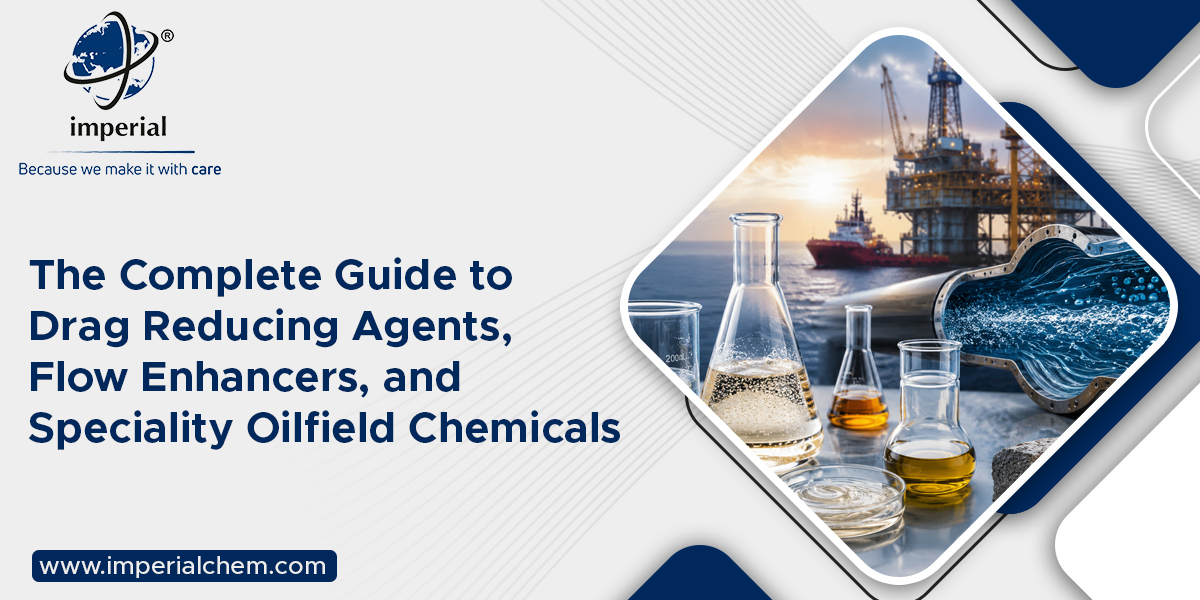
Pipeline problems rarely begin with a dramatic failure. It usually starts with rising pressure, slower flow, or higher pump use. At first, these changes may seem like normal operating shifts. Yet small losses can grow into costly daily problems. As a Flow enhancer for pipelines exporter in India, we understand how frustrating this can feel. At Imperial Oilfield Chemicals Pvt. Ltd., we help you find the cause before choosing a chemical.
Many people tell us that a pipeline can look fine while its output falls. Pumps keep running, teams stay busy, and no clear fault appears. Yet more energy is needed to move the same volume. This often points to friction, unstable flow, deposits, or changes in the fluid.
As a Bulk drag reducing agent supplier in India, we look beyond the product order. We ask about pipe size, flow rate, temperature, pressure, fluid type, and pump setup. Imperial Oilfield Chemicals Pvt. Ltd. uses this information to guide product choice and dose planning.
A drag reducing agent, often called a DRA, helps control turbulent movement inside a pipeline. Turbulence causes fluid to move in uneven patterns. This wastes energy and increases pressure loss. A suitable DRA can calm this movement without changing the main fluid in a harmful way.
Our work as a DRA for multiphase flow manufacturer in India needs extra care. Multiphase lines may carry oil, gas, water, and solids together. Each phase affects flow differently. A product that performs well in crude oil may behave differently in a mixed stream.
Picture water rushing through a narrow pipe at high speed. The flow begins to swirl and push against the pipe wall. A crude oil line can face a similar pattern. The pump must work harder because part of its energy is lost through friction.
As a Speciality chemicals for oil and gas manufacturer in India, we develop products that act within this moving fluid. A DRA uses long-chain polymers to reduce turbulent energy. Even a small dose may lower pressure loss when the product suits the pipeline and fluid.
As a Drag reducing agent manufacturer in Oman market supply, we also consider hot weather and storage needs. Heat can affect product life, viscosity, and feed control. Imperial Oilfield Chemicals Pvt. Ltd. plans packaging and handling around real site conditions.
The terms flow enhancer and drag reducing agent are often used together. Yet a flow enhancer may address more than turbulent drag. Some products help manage wax, heavy crude, poor movement, or cold-flow issues. The right choice depends on what is slowing the line.
Our work as a Global chemical exporter in India has shown us how much site conditions can vary. A product suited to one crude grade may not suit another. We review fluid data before suggesting a treatment, because guesswork often leads to waste.
Imperial Oilfield Chemicals Pvt. Ltd. may review the following details before making a recommendation:
As an ISO certified oilfield chemical company in India, we value clear records at every stage. Batch checks, raw material control, product tests, and traceable documents help us maintain steady quality. These steps also make site checks and repeat orders easier to manage.
A good product can still disappoint when injection is poorly planned. The DRA needs enough contact with the fluid, but excessive shear can damage its polymer chains. Pumps, valves, bends, and narrow points may affect product strength after injection.
As a Flow enhancer for pipelines exporter in India, we help you think about more than the dose. We consider the injection pump, line pressure, mixing needs, and distance from high-shear equipment. Imperial Oilfield Chemicals Pvt. Ltd. also supports controlled trials before full use.
You may be wondering, “Can we simply add more product if results seem weak?” We don’t advise that approach. A high dose may increase cost without giving equal gains. Poor injection, wrong product choice, or bad data may be the real cause.
Multiphase flow can change from one section of a line to another. Gas may expand, water may settle, and liquid hold-up may shift. Slugs can form and place sudden pressure loads on equipment. This makes product testing much more important.
As a DRA for multiphase flow manufacturer in India, we assess how the liquid and gas phases may respond together. We also look at water cut, shear exposure, and pressure changes. A field trial should begin with clear limits and close checks.
Imperial Oilfield Chemicals Pvt. Ltd. believes a trial should answer one clear question. Are we gaining useful flow or pressure relief at a sound cost? Clean records make that answer easier to trust.
A pipeline rarely needs only one type of chemical. Corrosion, scale, wax, foam, water, bacteria, and emulsions may also affect output. These problems can appear together, which makes chemical compatibility a key concern.
As a Speciality chemicals for oil and gas manufacturer in India, we consider how one treatment may affect another. Corrosion inhibitors, demulsifiers, scale inhibitors, biocides, and antifoaming agents must work without causing fresh issues. We use lab checks when the mix carries added risk.
At Imperial Oilfield Chemicals Pvt. Ltd., our range may support crude handling, pipeline movement, production systems, and process work. We focus on fit rather than pushing one product across every site. Your fluid and equipment should guide the final choice.
Buying in bulk can lower supply pressure, but volume alone isn’t enough. You also need steady batches, suitable packs, safe storage, and planned delivery. A late or uneven supply can upset treatment rates across the site.
As a Bulk drag reducing agent supplier in India, we plan around your expected use and available storage. We can discuss drums, intermediate bulk containers, and other supply formats. We also review lead times before the product becomes urgent.
Cross-border supply adds another layer of care. Weather, travel time, port handling, and local rules may affect the shipment. Product labels and safety papers must also match the order and destination needs.
As a Drag reducing agent manufacturer in Oman market supply, we prepare for harsh heat and demanding field use. We discuss storage limits before dispatch and select packs suited to the route. Clear planning protects both product quality and site readiness.
Our role as a Global chemical exporter in India also involves close contact before shipment. We confirm quantity, pack size, papers, route, and expected arrival. Imperial Oilfield Chemicals Pvt. Ltd. keeps this process clear so you know what to expect.
The lowest quote may look attractive when pressure is building. Yet a poor chemical match can cost far more through wasted dose and lost output. You need a supplier willing to ask hard questions before answering.
As an ISO certified oilfield chemical company in India, we work with set checks for quality and records. We also believe honest advice matters just as much. If more testing is needed, we’ll say so before asking you to commit.
Imperial Oilfield Chemicals Pvt. Ltd. brings product knowledge, export support, and practical care into one working relationship. We listen to what is happening inside your pipeline, not only what appears on an enquiry form.
Maybe your line is losing output, using more power, or showing unstable pressure. You don’t need to begin with a large order. Begin with operating data, a fluid sample, and a clear target.
We can then review the likely cause, select a suitable product, and plan a measured trial. That first step often brings more clarity than weeks of guessing. When the chemistry fits the system, better flow can follow without forcing the pipeline beyond safe limits.


High-performance additives help drilling fluids control heat, friction, fluid loss, cuttings, and wellbore strength. Each product supports a clear drilling need.
The right additives reduce drag, keep the hole clean, and protect the drill bit. This helps us maintain steady drilling with fewer stops.
Lubricants reduce friction, while shale inhibitors support weak rock around the well. Good hole cleaning also prevents cuttings from trapping the pipe.
Fluid-loss additives form a thin filter cake along the wellbore wall. This limits fluid entry into rock and helps keep the hole stable.
High heat can weaken polymers and change fluid thickness. Heat-stable additives help us maintain flow, filtration, and solids support under harsh conditions.
No. Each well has different rock, heat, pressure, water, and mud needs. We select a suitable blend after checking all key conditions.
We review mud tests, well depth, heat, formation type, and solids level. Lab checks then help us set a safe starting dose.
Rising torque, poor cuttings return, fluid loss, unstable viscosity, and higher pump pressure often show that the fluid needs review or treatment.
Yes. Casing wash additives remove mud, oil, and residue from casing surfaces. Cleaner surfaces can support stronger and more even cement contact.
Suitable additives can reduce stuck pipe risks, fluid loss, tool wear, and unplanned stops. These gains help us control rig time and treatment costs.
No additive suits every mud system. We must check its fit with base fluid, salts, solids, heat, and other products before field use.
We offer tested oilfield chemicals, steady batch quality, and clear product support. Our team helps match each additive with actual well and fluid needs.