
- All Products
- Corrosion Inhibitor
- Oxygen Scavenger
- Drag Reducing Agent / Flow Improver
- H2S Scavenger
- Triazine
- Demulsifier
- Emulsion Breaker
- Surfactant
- Wax / Parrafin Disperssant
- Asphaltene Inhibitor

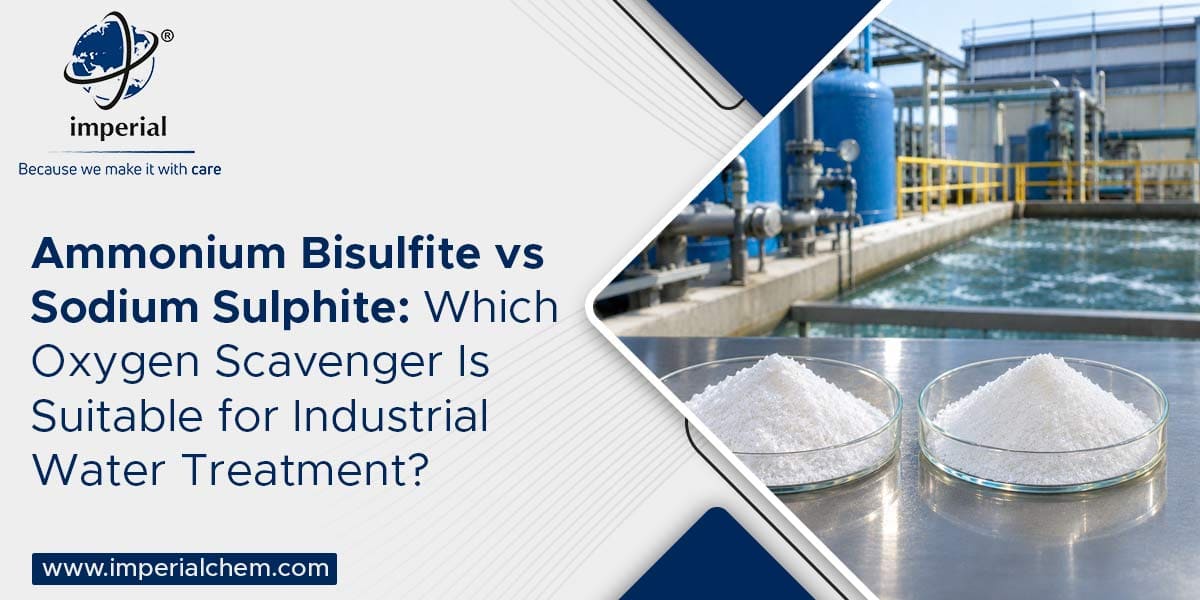
It's a hard call to make on a Monday morning. You've opened a feedwater line and found fresh pits beside a repair you signed off last winter. The dosing pump ran all weekend, and the shift log shows nothing unusual. At Imperial Oilfield Chemicals Pvt. Ltd., when you ask us about Ammonium bisulphite for oxygen scavenger in Korea, we want to hear that part of the story. Where you found the damage can tell us more than the pump setting alone.
For a low-pressure boiler with a working deaerator, we usually consider sodium sulphite first. For an oilfield water injection line with a liquid dosing pump, we give ammonium bisulphite a close look. Both chemicals remove dissolved oxygen. What changes our choice is how much oxygen reaches the dosing point, how long the chemical has to work and what happens to the water afterwards.
You can hold a clear glass of feedwater up to the light and see nothing wrong. Dissolved oxygen leaves no visible sign in that glass. Yet inside a steel line, oxygen can help corrosion eat into a small patch of metal. A pipe can look sound around a pit and still lose enough metal at that one spot to leak.
When we discuss Ammonium Bisulphite for process water treatment in Korea, we ask where you took your last oxygen reading. Suppose you collected the sample beside the dosing pump, while the damaged pipe sits beyond an open tank. Water can pick up fresh oxygen in that tank. Before we suggest changing the chemical, we want a reading that reflects what actually reaches the pipe.
In a low-pressure boiler plant, the deaerator does most of the work of removing dissolved oxygen. Sodium sulphite reacts with the oxygen left behind and forms sodium sulphate, a dissolved salt. At Imperial Oilfield Chemicals Pvt. Ltd., we favour this option when your boiler can tolerate the added salts and your shift team can measure the sulphite left in the water.
If you're considering Ammonium Bisulphite for boiler water treatment in Korea, we first ask what prompted the change. Perhaps your sulphite use rose just after you began bringing in more cold make-up water. We would check the deaerator temperature, vent and outlet oxygen reading before changing your order. A fresh drum of chemical won't fix a vent that has stopped working as intended.
As water turns to steam, dissolved salts stay behind in the boiler water. You remove some of that water through blowdown to keep the salts within your working limit. If you already run close to that limit, we would count the cost of extra blowdown, including the heat and treated water lost. A low price per bag can look less attractive once you include those costs.
At Imperial Oilfield Chemicals Pvt. Ltd., we wouldn't carry a low-pressure boiler treatment plan across to a high-pressure unit. The limits for feedwater and steam can be much tighter. We would review your boiler maker's guidance and the end use of the steam before recommending either chemical. In some systems, the right choice falls outside this pair.
Think of a water injection line where flow climbs each time a second pump starts. With a suitable dosing pump, you can meter liquid ammonium bisulphite into the flowing water and adjust the feed as demand changes. Our supply of Ammonium Bisulphite for process water treatment in Korea suits applications where liquid feed is practical, and the water chemistry allows its use.
The distance to the first piece of equipment matters. Imagine a dosing point a few metres before a steel pump. At normal flow, you may get an acceptable oxygen reading at the pump inlet. At peak flow, the water covers those same metres in less time. At Imperial Oilfield Chemicals Pvt. Ltd., we ask for both flow rates because a quiet shift can give you a misleading picture.
We also ask where the water goes next. Ammonium bisulphite introduces ammonium into the stream, which matters if your discharge has a nitrogen limit. When we assess Ammonium Bisulphite for boiler water treatment in Korea, we also ask about copper alloys in the steam and condensate system. Ammonia can contribute to copper alloy corrosion when oxygen is present. That detail belongs in the buying decision.
Before you put time into a trial, we suggest walking the line with someone who works the busiest shift. At Imperial Oilfield Chemicals Pvt. Ltd., we'd start with four observations you can match against your shift records.
Two drums can weigh the same and contain different amounts of active chemical. When you compare our offer with another Oxygen scavenger chemical supplier in Korea, ask for the active strength on the same basis in both quotes. If your pump measures litres and the quote gives strength by weight, you'll also need the liquid density. Without that figure, you can't make a fair comparison from the pump settings.
At Imperial Oilfield Chemicals Pvt. Ltd., when we quote Ammonium bisulphite for oxygen scavenger in Korea, we suggest taking the comparison one step further. Record how much product you use per cubic metre of water while meeting the same outlet oxygen target. Include the time spent mixing a dry product if that forms part of your current routine. Now you have a cost that means something on your shift.
For a low-pressure boiler that already meets its oxygen target with sodium sulphite, we'd need a clear reason to change. A sound reason might be the time your crew spends making up fresh solution. For an injection line with changing flow, we'd look closely at liquid ammonium bisulphite, then check performance during the busiest part of the day. That's when you most need the treatment to hold up.
If you need an Oxygen scavenger chemical supplier in Korea, bring us your usual flow, peak flow, water temperature and recent oxygen readings. At Imperial Oilfield Chemicals Pvt. Ltd., we also welcome the detail that never made it into the logbook. Perhaps the leak always appears after a shutdown, or only one branch keeps failing. That's the kind of detail we'd want to hear across the table before we recommend what you buy.
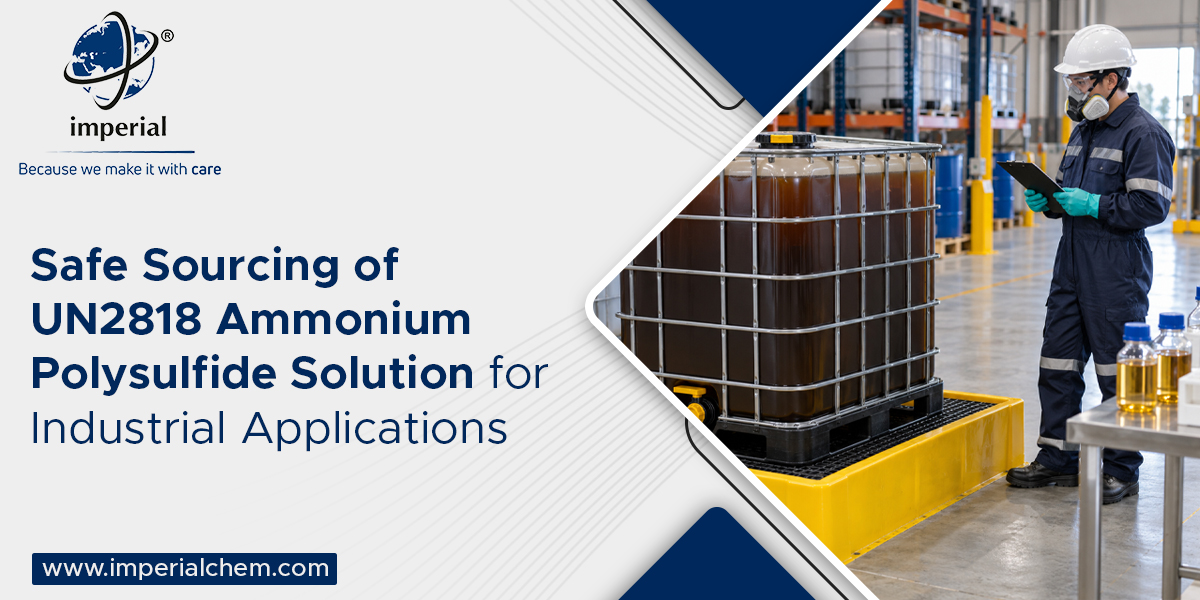
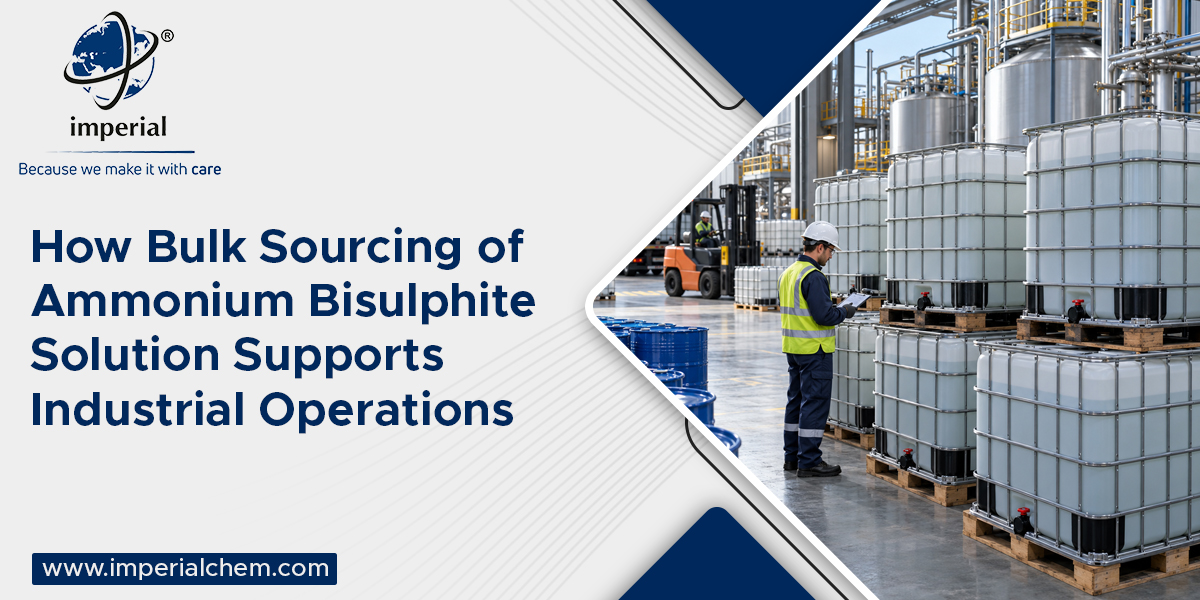
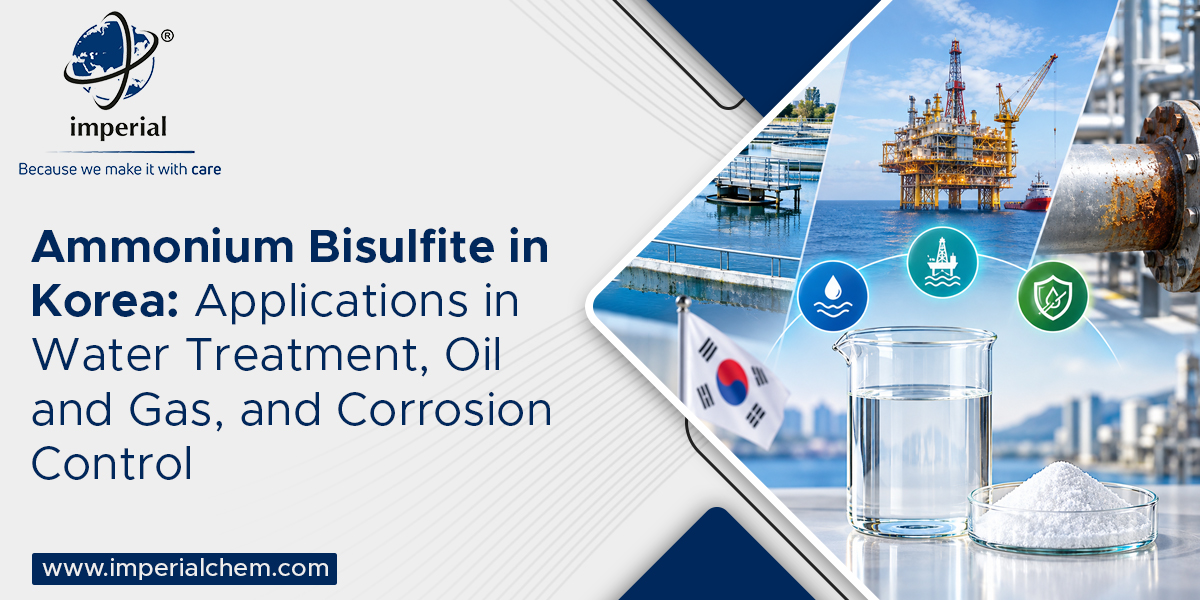


Sodium sulphite is a common choice for low-pressure boiler feedwater. Liquid ammonium bisulphite often suits oilfield water injection systems where a pump meters the chemical continuously.
A working deaerator removes most dissolved oxygen before chemical treatment. At Imperial Oilfield Chemicals Pvt. Ltd., we recommend checking deaerator performance when chemical use rises unexpectedly.
Liquid ammonium bisulphite can be pumped directly into the water line. At Imperial Oilfield Chemicals Pvt. Ltd., we recommend matching the feed rate to water flow and oxygen load.
In theory, 7.88 mg of pure sodium sulphite removes 1 mg of oxygen. The actual product dose depends on its strength and your target sulphite residual.
No. At Imperial Oilfield Chemicals Pvt. Ltd., we recommend recalculating the feed rate using product strength, liquid density and oxygen load before checking the treated water.
Measure before dosing to establish the oxygen load, then sample just upstream of the equipment you want to protect. Keep air out of both samples.
At peak flow, water spends less time between dosing and the equipment. Imperial Oilfield Chemicals Pvt. Ltd. recommends checking both contact time and chemical feed rate.
Yes, but sodium sulphite reacts more slowly at lower temperatures. At Imperial Oilfield Chemicals Pvt. Ltd., we recommend checking outlet oxygen during your coldest operating conditions.
Sodium sulphite can add unwanted dissolved salts and break down at higher pressures. Imperial Oilfield Chemicals Pvt. Ltd. recommends following your boiler maker's water and steam limits.
Sodium sulphite forms sodium sulphate as it removes oxygen. If dissolved salts already approach your boiler's limit, you may need more blowdown to control the build-up.
At Imperial Oilfield Chemicals Pvt. Ltd., we suggest comparing cost per cubic metre at the same outlet oxygen target. Include mixing labour and any extra blowdown.
Send Imperial Oilfield Chemicals Pvt. Ltd. your application, water temperature, pH, usual and peak flow, inlet oxygen reading and target outlet level. For boilers, include operating pressure.